
Existential Psychologist |
Nostalgia Futurist
Clay Routledge’s work focuses on helping people reach their full potential and build meaningful lives. He spent two decades as a professor of psychology, and management, and distinguished professor of business. He taught undergraduate, MBA, and PhD courses in social/personality psychology, cultural psychology, research methods, and team leadership. He’s published more than 100 academic papers, co-edited three books, authored three books, and received numerous awards for research and mentorship.
Clay is Executive Vice President and Chief Operating Officer (COO) at Archbridge Institute, Director of the Human Flourishing Lab, and coeditor of Profectus.
Subscribe to read his weekly newsletter Flourishing Friday.
Latest Post:
Will AI Help or Hurt Our Pursuit of Meaning?
Insights from the Human Flourishing Lab's latest Progress Pulse survey
Human extinction is the ultimate existential threat. But even people who don’t think that AI will kill us might still view it as existentially threatening. That’s because humans don’t just strive to survive. We also strive for significance. If AI can do many of the things we once believed were distinctly human, people may start to wonder what their place in the world will be.
In our latest Progress Pulse survey, conducted with The Harris Poll among over 2,000 American adults, we explored whether people believe AI will support or undermine meaning. We also looked at whether these beliefs are related to how people think about the nature of AI.
Read more on Substack
Head Out: A new public education initiative from the Archbridge Institute’s Human Flourishing Lab
Get out of your head! Clay is spearheading a new project focusing on mental health. In the US we spend more time and resources on mental health with worse outcomes.
Head Out aims to take a different approach using research, accessible media, toolkits and other materials encouraging people to get out of their heads and into the world. Five Head Out themes offer an outward action approach: Move; Work; Create; Connect; and Transcend. Learn more here
Featured work in:


New Book Available Now!
Discover research and practices for mindfully using nostalgia to live a more intentional, connected, and meaningful life.
“In its healthiest form, nostalgia is the way we weave the past into a meaningful life story,” Dr. Routledge says. “It helps us see what makes life worth living—and inspires us to do great things.”
Early Praise for Past Forward
“Clay Routledge makes the thought-provoking case that looking back with nostalgia can actually be good for us. Past Forward comes to a surprising but solid conclusion: thinking about the past can help us cope, build self-esteem, connect to others, and manage stress. It’s a fascinating look into the research on how humans think about time.” ―Jean M. Twenge, PhD, author of Generations
“In Past Forward, acclaimed psychologist Clay Routledge delves deeply into the profound and often underestimated power of nostalgia. Drawing on decades of research, this thought-provoking and lucidly written book unravels the mysteries of our longing for the past and reveals how we can all use nostalgia intentionally to improve our present lives and build a brighter future.” ―Constantine Sedikides, PhD, professor of social psychology, University of Southampton, UK
“If you miss ‘the good old days,’ well, lucky you. In Past Forward, Clay Routledge shows us that nostalgia is an unmistakably positive force in life―combating loneliness, boosting self-esteem, and driving society forward. A fascinating book.” ―Arthur C. Brooks, PhD, professor at the Harvard Kennedy School and Harvard Business School, author of From Strength to Strength, a #1 New York Times bestseller
“In Past Forward, Clay Routledge convincingly argues that nostalgia can be a critical ally of progress. Counterintuitively, our nostalgic longing for the past doesn’t hold us back. It helps us adapt to a changing world and find the motivation to move forward with an optimistic outlook. Importantly, Routledge shows readers how they can take advantage of the power of nostalgia to improve their own lives and the world around them.” ―Marian L. Tupy, founder and editor of humanprogress.org, coauthor of Ten Global Trends Every Smart Person Should Know and Superabundance
“Clay Routledge thoughtfully explores the value of memories and nostalgia, emphasizing their profound impact on our personal growth and collective advancement, urging us to embrace the past as a guiding force toward a brighter tomorrow. For our scrapbooking community, we’ve known for a long time that there is magic in nostalgia, but Clay Routledge helps us understand exactly how that magic of the past impacts our futures.” ―Alison Dutton, CEO of Creative Memories
Order your copy today!
Latest Content
An Existential Psychologist on Making a Meaningful Life
WHYY The Connection with Marty Moss-Coane | August 21, 2026
Psychologist Clay Routledge explains one downside to our focus on mental health is what he calls the "pathologizing of ordinary life."
How to Touch Grass: The Power of Pre-Internet Nostalgia
The Atlantic, interview with Clay Routledge | July 27, 2026

Stop Pathologizing Ordinary Life
New York Times, by Clay Routledge | July 26, 2026
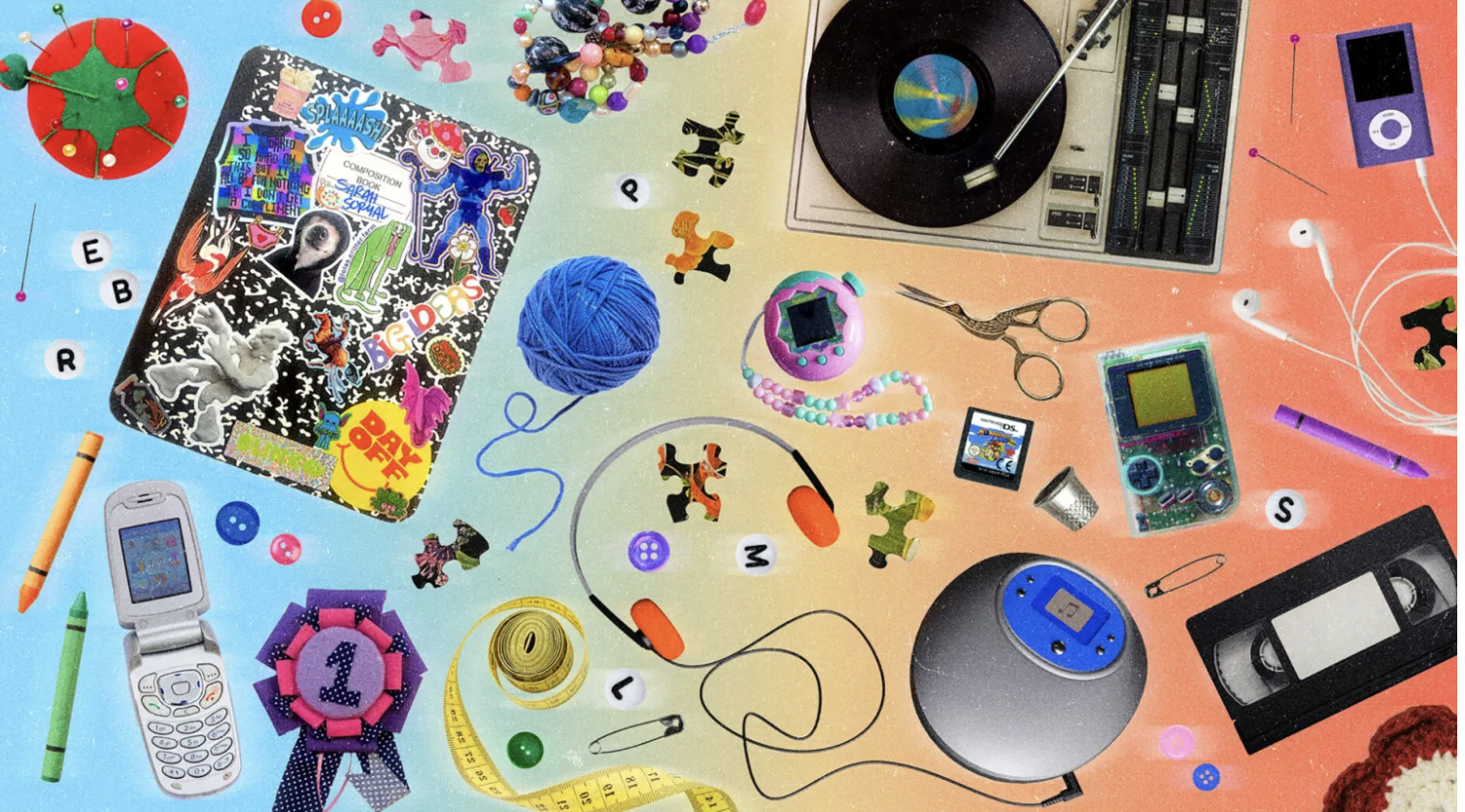
Why Gen Z is Nostalgic for a World it Never Knew
Big Think, by Clay Routledge | July 9, 2026

Aspen Ideas: Health
Back to the Future: The Power of Nostalgia
Nostalgia is more than a longing for the past—it’s a psychological tool that fosters optimism, cultivates a sense of belonging, and propels us forward.

I’ve Spent 25 Years Studying Loneliness. AI is about to Make it Much Worse
Fortune, by Clay Routledge | May 23, 2026

Chicago Tribune, by Justin Callais & Clay Routledge | March 2, 2026

American Optimism Proves Its Resilience
Wall Street Journal, by Clay Routledge | December 23, 2025

Why Gen Z Is Resurrecting the 1990s
The New York Times, by Clay Routledge | August 24, 2025

Americans Still Believe in America’s Role in Global Progress
Real Clear Politics, by Clay Routledge | August 22, 2025

Want a More Hopeful America?
Increase Awareness of Past Progress
Fortune, by Clay Routledge | March 5, 2025